
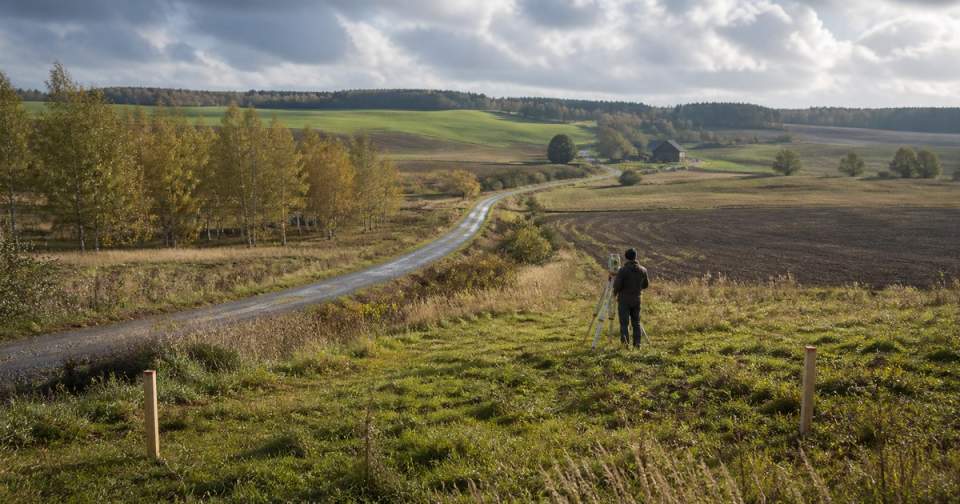
If you plan to buy land at auction in Lithuania, begin with the legal right and permitted use—not the view. The auction may offer a lease rather than ownership, only a fractional share, agricultural land that cannot readily become a housing plot, or land with no registered access.
Land due diligence must answer two separate questions:
- What legal right is being auctioned?
- What can you realistically do with it?
Do not bid until both answers are supported by documents.
1. Is this a sale or a lease auction?
Lithuanian state-land notices frequently offer lease rights. A low starting amount may be annual rent or another lease payment, not the purchase price of freehold land.
Record:
- ownership sale or lease;
- lease term and renewal conditions;
- annual or total payment structure;
- indexation or additional charges;
- permitted activity;
- deadlines to sign the contract;
- transfer, sublease and termination rules.
Do not compare a lease bid with the price of privately owned land.
2. What exact plot or share is included?
Match the auction notice to the current Real Property Register and cadastral documents. Verify:
- unique and cadastral numbers;
- area;
- ownership share;
- registered main purpose and use;
- buildings or structures on the plot;
- appurtenant land included with a building;
- registered rights, legal facts and restrictions.
A listing may sell 1/2 of a plot, a narrow access strip or land attached to another asset. Satellite imagery does not define the legal object.
3. Are you eligible to acquire it?
Buyer eligibility can be a hard stop, especially for:
- agricultural land;
- forest land;
- plots or structures in protected or security-sensitive areas;
- assets subject to a licence or professional qualification;
- foreign buyers who do not meet Lithuania's land-acquisition rules.
European e-Justice guidance says the judicial-auction notice must identify special acquisition requirements where they apply. The successful bidder may have to provide supporting documents and can lose the purchase right and bidder's fee if ineligible.
Agricultural land can involve National Land Service (NŽT) consent, area-cap checks and statutory priority rights. The detailed route changed in 2026, so use current NŽT guidance for the exact plot and buyer. Do this before registration, not after winning.
4. What is the registered purpose and use?
The registered purpose is not a marketing label. It helps determine what activity is lawful and which planning or permitting route applies.
Do not assume that:
- agricultural land can immediately become residential land;
- “other” purpose means any development is permitted;
- a garden plot supports the same project as a residential parcel;
- an industrial-looking area permits your specific operation;
- a lease right includes construction rights.
NŽT's 2026 guidance emphasises that agricultural land is intended for agricultural activity and can carry continuing use obligations. Treat any future change of purpose as unconfirmed until a planner and the competent authority verify it.
5. Which special land-use conditions apply?
Lithuania's special land-use conditions can limit building, excavation, vegetation removal or other activity. Review current register data and official spatial layers for:
- utility protection zones;
- water-body and shoreline protection;
- protected territories;
- cultural heritage;
- road and railway corridors;
- forests, wetlands and natural grasslands;
- drainage and reclamation infrastructure;
- sanitary or security zones;
- flood or waterlogging risk.
The Lithuanian Spatial Information Portal provides useful public layers, including cadastre, orthophotos, protected areas and special land-use conditions. It is a screening tool, not a substitute for a current legal extract or professional opinion.
6. Is there legally secure access?
A visible track is not the same as a registered right of access.
Check whether the plot:
- borders a public road;
- has a registered easement across another property;
- relies on an informal route;
- is affected by a neighbour's right of way;
- requires a new entrance approval;
- can be reached by the vehicles needed for construction or business use.
Inspect the route on site. If access depends on another owner, obtain a legal explanation of the registered right before valuing the plot as usable.
7. Are utilities genuinely available?
A power line or water main near the boundary does not prove that connection is possible, timely or affordable.
For the intended project, obtain preliminary evidence from the relevant network operators about:
- electricity capacity and connection point;
- water and wastewater;
- gas, where relevant;
- telecommunications;
- storm-water management;
- any capacity upgrade or network extension.
If central services are unavailable, check whether a well, local wastewater system, heating solution and increased electrical capacity are permitted. Include design, approvals, construction and ongoing maintenance.
8. What do planning documents allow?
Use the official planning portals and the municipality's current documents to review:
- functional zone;
- building density and intensity;
- height limits;
- building type and setbacks;
- planned streets or infrastructure corridors;
- active or proposed detailed plans;
- nearby uses that may affect noise, traffic or value.
The Planning and Construction portal maps and REGIA help locate relevant layers. A public map is a starting point. Ask a qualified designer or planner to test the actual project.
9. Are the boundaries clear on the ground?
Check whether cadastral measurements have been completed and whether boundary markers are present. Compare the plan with fences, roads, cultivation and neighbouring use.
During a site visit look for:
- missing or displaced markers;
- fences outside the mapped line;
- neighbours using part of the plot;
- buildings close to or across a boundary;
- unexplained tracks;
- fill, excavation or dumped material;
- drainage ditches and waterlogging;
- steep terrain that changes construction cost.
If boundaries are uncertain, budget for a surveyor and do not value the whole advertised area as freely usable.
10. What is the site's physical and environmental condition?
Maps cannot reveal every cost. Visit the plot in conditions that expose drainage and access where possible.
Consider:
- soil and geotechnical conditions;
- contamination from historic use;
- unexploded-ordnance or industrial history where relevant;
- trees and removal restrictions;
- demolition or waste;
- topography;
- seasonal flooding;
- archaeological or heritage constraints.
A formal environmental or geotechnical investigation may be justified for an industrial site, former fuel facility, filled ground or a valuable development plot.
11. Read every auction-specific payment and contract term
The same portal can host bailiff judicial auctions, public sales and lease tenders. They do not share one payment structure.
List separately:
- registration fee;
- bidder's fee or guarantee deposit;
- whether each amount is refundable;
- final payment deadline;
- contract/notarial deadline;
- land tax or lease obligations;
- organiser's documented costs;
- consequences of late payment or ineligibility.
Pay only through the verified official route.
12. Calculate value from permitted use
Use the plot's verified use, not a hoped-for rezoning:
Maximum bid = value for the currently supportable use − access works − utilities − surveys and design − site preparation − legal/planning risk − contingency.
If the business case requires a future planning decision, treat that upside as zero until a competent professional can support its probability, cost and timetable.
Land-auction checklist
| Question | Evidence | Do not bid on the assumption that… |
|---|---|---|
| Sale or lease? | Official conditions | The starting figure buys ownership |
| Exact plot/share? | Register and cadastral plan | The whole visible area is included |
| Buyer eligible? | NŽT/organiser/legal confirmation | A foreign or corporate buyer automatically qualifies |
| Permitted use? | Register, planning documents | Agricultural land can become housing land |
| Restrictions? | Register and official spatial layers | Blank-looking land is unrestricted |
| Access? | Public road or registered easement | A visible track is legally usable |
| Utilities? | Operator information | Nearby infrastructure means a cheap connection |
| Boundaries? | Measurements and site inspection | Map lines match fences on the ground |
Browse current land and property auctions in Lithuania, then verify every material fact in the official notice and primary registers.
This article is general information, not legal, planning, environmental or engineering advice.
Sources
- European e-Justice: Judicial auctions in Lithuania
- Lithuanian Spatial Information Portal
- REGIA interactive map
- Planning and Construction portal maps
- NŽT: buying private agricultural land in 2026
- NŽT: agricultural land and change-of-use limits
Frequently asked questions
Does a state-land auction always sell ownership?
No. It may offer ownership or a lease right. Read the right, term and payment structure in the notice.
Is a public map enough to verify a plot?
No. Use maps for screening, then verify legal status through current register/cadastral documents and competent authorities.
Can I build a house on agricultural land?
Do not assume so. Check purpose, use, planning documents, special conditions and the rules for the intended project.
Can a foreigner buy auction land?
It depends on the buyer and land category. Verify constitutional, statutory and auction-specific eligibility before registering.